
Single-wall or double-wall — which cup fits?
The choice between a single-wall and a double-wall paper cup looks trivial right up until someone is holding a hot flat white in a thin cup and reaching for a second one to slide over it. For a café, a roastery, a hotel or an events team ordering custom paper cups, the wall construction quietly decides three things at once: how the drink feels in the hand, how premium the cup looks on the counter, and how much every unit costs. This guide explains the difference in plain language and shows when the insulating air gap is genuinely worth paying for.
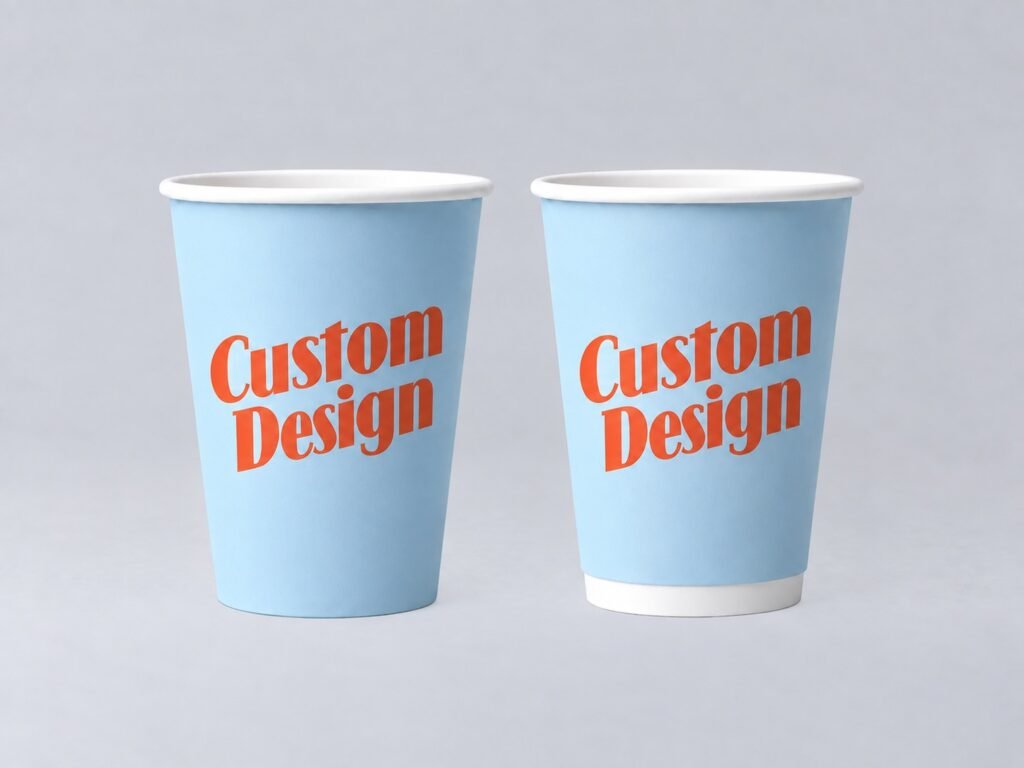
What “single-wall” and “double-wall” actually mean
A single-wall cup is one ply of food-grade paperboard with a thin liquid barrier on the inside. It is the classic takeaway coffee cup: light, familiar and available from 4 oz espresso sizes up to 16 oz. Because there is only one layer between the drink and your hand, a very hot drink is felt directly through the wall.
A double-wall cup is exactly what it sounds like: an outer wall and an inner wall with a pocket of air between them. Nordicup’s double-wall cups come in 8, 12 and 16 oz and feel noticeably firmer and more substantial. That extra structure is what carries a brand well and survives a busy counter without denting.
The air gap, and why it matters
The whole point of a double-wall cup is that trapped air is a poor conductor of heat. Instead of heat moving straight from an 80 °C drink into your fingers, it has to cross the inner wall, the still air gap and the outer wall. That slows the transfer enough that a freshly poured 12 oz flat white can be held comfortably without a cardboard sleeve. The same air gap works in the other direction too: the drink loses heat to the room a little more slowly, so it stays pleasant for longer on a walk to the office or across a conference floor.
Single-wall cups solve the same heat problem with an add-on — a clip-on sleeve — rather than with the cup itself. That is a perfectly good solution, but it is a second component to store, print and pay for.
When a single-wall cup is the right call
Single-wall is the smart, economical default in a lot of real situations:
- Cold and warm drinks — where heat through the wall is not an issue at all.
- High-volume takeaway — where a sleeve is expected anyway, or where drinks are handed over in a carrier.
- Tight per-unit budgets — a single-wall cup uses less board and no assembly step, so it is the lower-cost construction.
- Lighter, print-forward designs — where you want the largest possible clean canvas for artwork at the best price.
If most of your service is iced drinks, water or short blacks handed straight into a tray, you rarely need to pay for a second wall.
When the double-wall cup earns its place
Double-wall starts to pay for itself the moment the cup is meant to be held for a while and to feel premium:
- Specialty hot drinks served without a sleeve — flat whites, cappuccinos, pour-overs, mulled drinks.
- Brand-led venues — where the weight and rigidity of the cup is part of the impression, from boutique hotels to flagship stores.
- Longer holds — outdoor markets, winter events, stadiums and anywhere the drink travels before it is finished.
- Sleeve-free service — which removes a component and the waste that comes with it, and keeps your artwork on one continuous surface.
Because double-wall cups take the same 8, 12 and 16 oz lids as their single-wall counterparts, switching does not force you to rethink lids or dispensers.
Sizes, materials and print at a glance
Single-wall runs from 4 to 16 oz; double-wall covers 8, 12 and 16 oz. Both are printed in full colour by offset or flexo — the method follows your run size, not the wall construction. Both use food-contact-safe inks and carry the same food-contact declarations and ISO 9001 / ISO 22000 backing.
Cost: what really changes between the two
A double-wall cup uses more board and an extra forming step, so its unit price is higher than a single-wall of the same size. The honest comparison, though, is not cup versus cup — it is cup-plus-sleeve versus double-wall. Once you add the price, storage and handling of clip-on sleeves to a single-wall programme, a sleeve-free double-wall cup often lands closer than people expect, while looking considerably more premium. Both constructions start at a 1,000-unit minimum, so you can trial a size before committing to a season’s stock. You can see indicative figures when you request a quote.
How to decide in 30 seconds
Ask two quick questions. Is the drink hot and served without a sleeve? Lean double-wall. Is the cup mainly for cold or warm drinks, or always sleeved and price-sensitive? Single-wall is enough. Still unsure — that is exactly what a specialist is for.
Not sure which wall you need?
Tell us your drinks, sizes and quantity — we’ll recommend a construction, prepare a visual proof and send a quote. We reply within one business day.
FAQ
They help, but the bigger, more noticeable benefit is hand comfort. The air gap slows heat reaching your fingers so the cup can be held without a sleeve; it also slows cooling modestly, which matters most for drinks carried some distance before they are finished.
Yes. Matching 8, 12 and 16 oz sizes share lid diameters, so you can change construction without changing lids or dispensers.
They are made from food-grade paperboard with a thin liquid barrier and should be recycled through paper-cup or dedicated collection streams where those exist. The required EU plastic marking is prepared together with your artwork, so the cup is correctly labelled for its market.
1,000 cups of one size with one design, for both single-wall and double-wall. Lead time is typically 2–3 weeks from written artwork approval, including delivery.
Yes — we’re happy to send samples of existing cups so you can check the material, wall thickness, lid fit and print quality in your hands. Custom-printed samples aren’t produced before an order; you approve your design on a digital proof instead.
Other articles
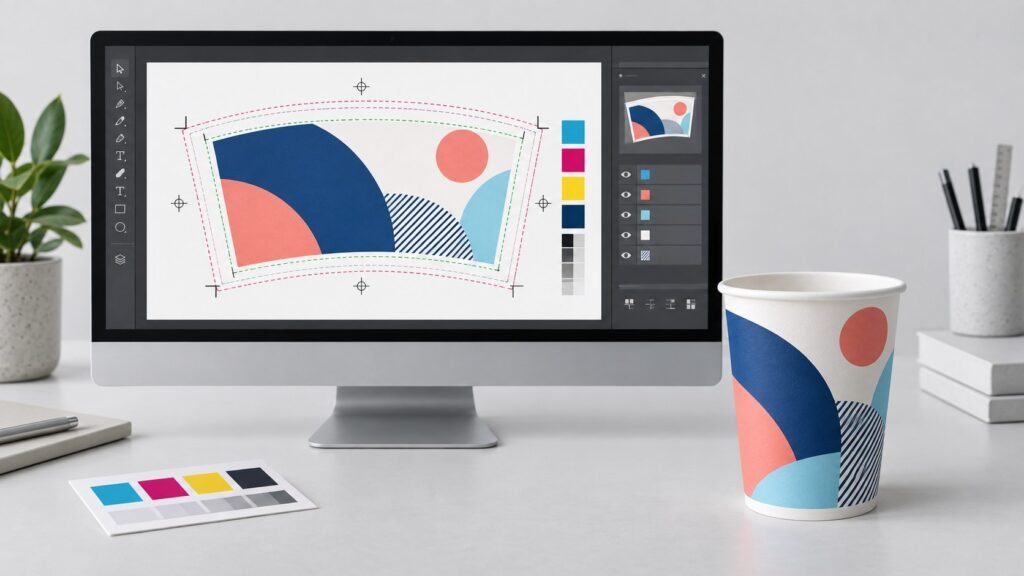
Getting your artwork print-ready for cups
Vector files, outlined text and the free check before proofing — a plain-language checklist for print-ready custom cup artwork.
Read →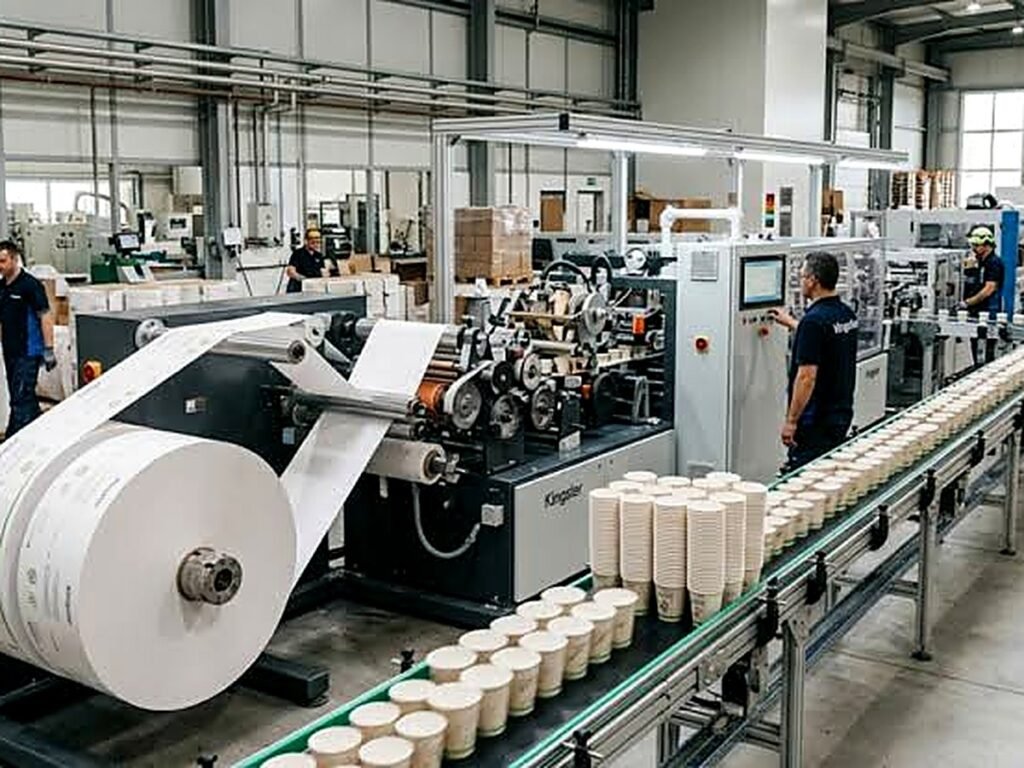
Why custom cup lead times are 2–3 weeks
Where the 2–3 weeks go, stage by stage, when the clock starts, what can stretch the lead time, and how to plan a launch or a repeat order around it.
Read →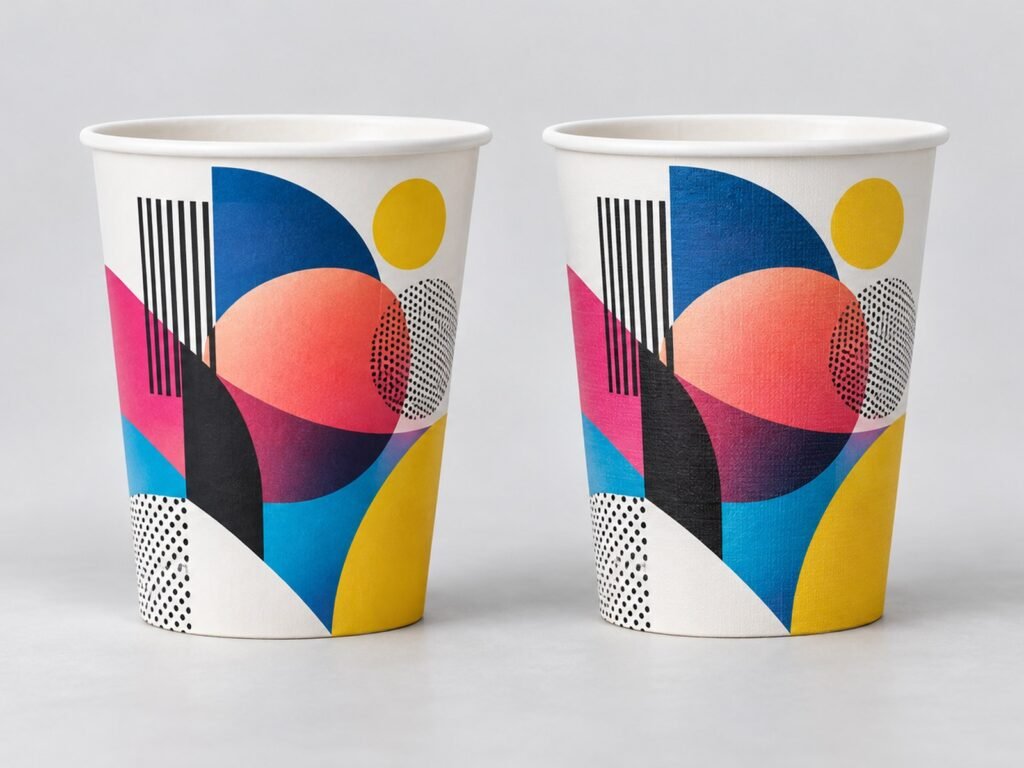
Offset vs flexographic printing on cups: what’s the difference?
What changes between CMYK offset and flexo — detail, colour and cost — and how the right method follows your design and order quantity.
Read →